
Search
- Contact Us
- Claims
-
Log In
If you haven’t registered your account for online access yet, register now.
Other Products
Quick Links



THOUGHT LEADERSHIP
Why retirement income has become the defining financial challenge of our time
New York Life | April 1, 2026
A conversation with Matt Wion, Head of Retail Annuities, New York Life.

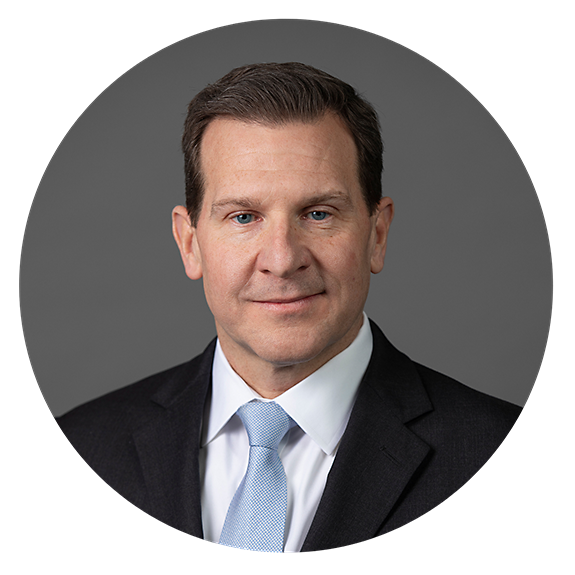
Matt Wion
Matt Wion is Head of Retail Annuities at New York Life Insurance Company. He serves on the board of directors of the Insured Retirement Institute and on LIMRA's Annuity Advisory Board.
What's the fundamental problem the United States is facing when it comes to retirement security?
The math is hard, and it's getting harder. More than 11,000 Americans are turning 65 every day, a pace that will continue through 2030.¹ And yet the traditional infrastructure that supported previous generations in retirement has largely eroded. In 1975, about 39% of private-sector workers were covered by a defined benefit pension plan. By 2023, that had fallen to 11%.
Social Security, even if fully solvent, only replaces about 40% of pre-retirement income. Our Wealth Watch research finds that less than one in five Americans say they have a retirement strategy. People have spent their careers focused on accumulation, but turning those assets into a reliable income stream is a fundamentally different challenge. It requires a different set of tools.
For someone approaching retirement without a pension, what does the research say about what works?
Three behaviors make a material difference in retirement outcomes: working with a financial professional, having a comprehensive financial strategy, and owning protection products like annuities. Bundling those behaviors is more powerful than any one of them alone. People who work with an advisor and have a financial strategy are significantly more likely to have retirement savings and feel confident in their financial future.
The psychological piece matters as much as the financial piece. Retirees who lack guaranteed income often constrain their spending because they're afraid of outliving their assets. A guaranteed income floor addresses the financial risk of longevity and changes behavior and quality of life in retirement.
Despite the clear need, many people still find annuities confusing or are skeptical of them. Why does that perception gap persist?
Part of it is that annuities are genuinely complex products, and the industry hasn't always done a great job of making them approachable. There's been a tendency to compete on more features, more riders, and more benefit structures, when what consumers and advisors often want and need is clarity and simplicity.
A trusted advisor with real expertise in retirement income can make an enormous difference in whether someone understands and acts on these solutions. The retirement planning conversation has long centered on accumulation, but as people move closer to and into retirement, a host of other considerations become increasingly relevant: sustainable income, longevity risk, and healthcare costs. Starting that conversation earlier, and planning across every life stage, is where the industry needs to go. Adults who own annuities are more than twice as likely to feel prepared for retirement as those who don't, and closing that gap is one of the most important things our industry can do.
Given all of that, what should advisors be thinking about when it comes to retirement income planning?
The advisors who are best positioned have made one important shift: they have moved from asking "how do we grow this?" to "how do we make it last?" For many clients, the savings question is largely answered. What they often haven't done is build a strategy for converting those assets into sustainable income, one that accounts for longevity, healthcare, and the confidence to spend freely in retirement. That's where advisors can add enormous value, and it's an underdeveloped part of many client relationships.
When a client has guaranteed income that covers their essential expenses, such as from an income annuity, it changes how they manage everything else. They can stay invested in the market with more confidence and spend more freely on the things that matter most to them. Guaranteed income unlocks better decisions across the whole portfolio, and advisors who can explain this clearly are giving clients more opportunities in retirement.
Annuity sales have surged in recent years. What's driving that momentum?
Two things, primarily. The interest rate environment has made annuities considerably more attractive. Industry sales were $250 to $300 billion a few years ago and reached more than $460 billion in 2025. But the more durable tailwind is demographic. We're in the heart of "Peak 65," a decade-long wave of Baby Boomers entering retirement without pensions, with uncertainty about Social Security, and with a genuine need for guaranteed income. This underlying need is structural, and it persists regardless of where rates go.
You sit on the Insured Retirement Institute board and are involved in its Digital First for Annuities initiative. For readers who may not be familiar, what is the IRI and what is Digital First trying to accomplish?
The IRI is the leading trade association for the retirement income industry, representing insurers, asset managers, and financial services firms committed to helping Americans achieve financial security in retirement. Its Digital First for Annuities initiative is focused on modernizing the way annuities are bought, sold, and serviced, with the goal of making the experience as seamless for advisors and clients as it is for any other financial product.
The financial services industry has a responsibility to make it as easy as possible for people to access the solutions they need. In annuities, that means investing in the processes and technology that reduce friction at every step. The 1035 exchange is a good example: a tax-free transfer of an existing annuity from one carrier to another that used to routinely take around 20 days of paperwork, calls, and follow-up. Through the IRI's work on standardized electronic exchange, we have seen that timeline compress significantly, in some cases to same-day. There is still work to do, and adoption across the industry is ongoing, but the direction is clear. Removing this kind of friction serves clients and advisors alike, and it strengthens the entire industry as a result.
Where do you see the greatest opportunity for the industry in the years ahead?
Meeting people where they are. Tens of millions of Americans need retirement income solutions and haven't yet connected with the guidance or the products that could make a meaningful difference in their financial security. Annuities are a significant part of that picture, but the broader opportunity is about expanding access to holistic retirement planning. Reaching more people means being present in the channels they're already in: through companies like New York Life with their own advisors and agents, as well as workplace retirement plans, banks, and brokerage accounts. It also requires continued simplification: making financial planning and the products that solve real financial challenges easier to understand, access, and use. Our job is to close the gap between the people who need these solutions and the guidance that can help them get there.




Media contact
Kevin Maher
New York Life Insurance Company
(212) 576-7937
Kevin_B_Maher@newyorklife.com